
Description
Choosing an ERP system is no longer just about accounting or inventory. Today’s organizations expect their ERP to automate decisions, support global compliance, integrate with modern technologies, and adapt to industry-specific workflows. This shift has reshaped the ERP landscape, creating space for vendors that focus not only on scale but also on specialization and usability.
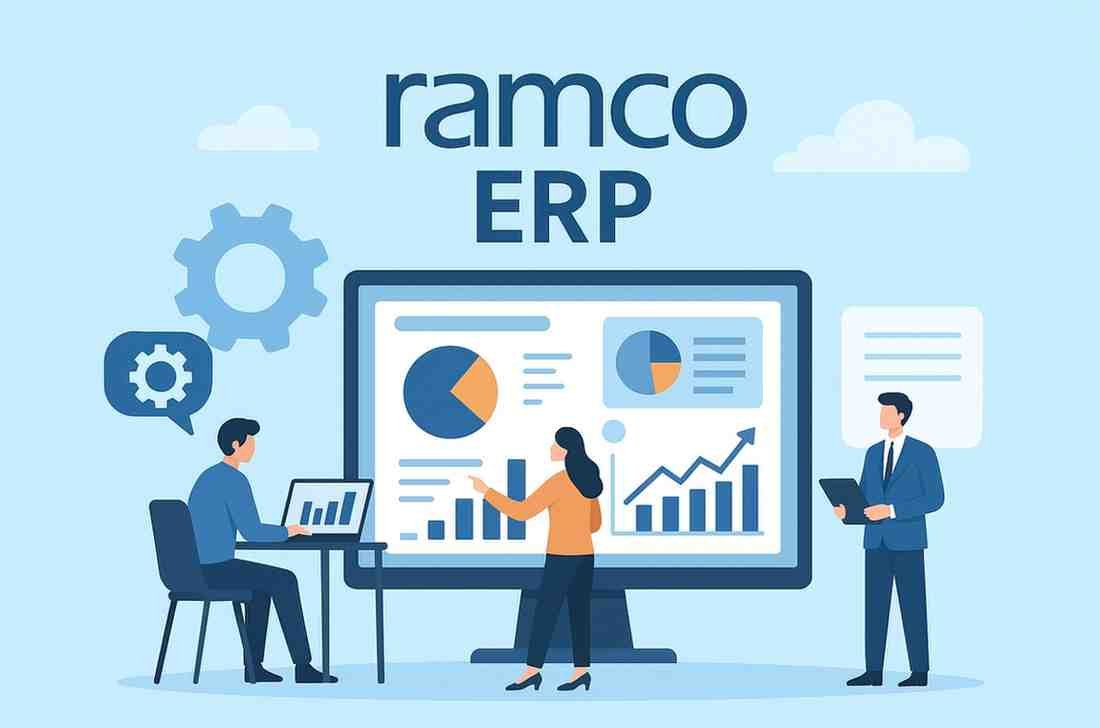
Ramco ERP is one such platform. Built with a cloud-first mindset and strengthened by deep domain expertise in areas like global payroll, aviation maintenance, and complex manufacturing, Ramco ERP positions itself as an intelligent enterprise platform rather than just another transactional system.
This in-depth review explores what Ramco ERP really offers, where it excels, where it struggles, and who should seriously consider it.
Understanding Ramco ERP’s Philosophy
Ramco ERP is designed around a simple but powerful idea: enterprise systems should think for users, not just record transactions.
Instead of positioning itself purely as a finance or supply-chain system, Ramco ERP emphasizes:
-
Automation over manual workflows
-
Industry intelligence over generic templates
-
Mobility and accessibility over desktop-only design
-
Decision support over static reporting
This philosophical shift influences every aspect of the platform — from how users interact with the system to how large enterprises deploy it globally.
A Cloud-Native ERP Built for Modern Enterprises
Ramco ERP is natively built for the cloud. Unlike older ERP systems that were later “migrated” to cloud hosting, Ramco was architected from the ground up to operate as a multi-tenant SaaS platform.
What this means in practice:
-
No on-premise infrastructure requirements
-
Faster upgrades with minimal disruption
-
Scalability across geographies
-
Lower dependency on internal IT teams
For multi-location organizations, this architecture significantly simplifies global rollouts and ongoing maintenance.
Core ERP Modules Explained
Ramco ERP delivers a broad and tightly integrated suite of enterprise modules. Let’s break them down clearly.
Financial Management: More Than Just Accounting
Ramco’s finance module goes far beyond bookkeeping. It is designed for organizations with multiple legal entities, currencies, and compliance requirements.
Core capabilities include:
-
General ledger with flexible chart of accounts
-
Accounts payable and receivable
-
Fixed asset lifecycle management
-
Cash and bank management
-
Inter-company accounting and consolidation
-
Budgeting and variance analysis
What stands out is how closely finance is linked with operations. Manufacturing issues, payroll runs, procurement costs, and inventory movements all flow seamlessly into financial records without manual intervention.
Supply Chain and Inventory Management
Ramco ERP offers end-to-end supply chain control suited for mid-to-large enterprises.
Key features include:
-
Procurement planning and supplier management
-
Multi-warehouse inventory control
-
Demand forecasting and replenishment
-
Lot, batch, and serial tracking
-
Order fulfillment and logistics integration
For companies dealing with complex sourcing, global vendors, or regulated items, Ramco provides visibility and traceability across every movement.
Manufacturing with Real-Time Intelligence
Manufacturing is one of Ramco ERP’s strongest areas outside aviation. The system supports complex production environments that require constant optimization.
Manufacturing capabilities include:
-
Production planning and scheduling
-
Bill of Materials (BOM) management
-
Work center capacity planning
-
Shop-floor execution
-
Cost tracking and variance analysis
What makes Ramco compelling here is its in-memory planning engine, which enables faster simulations and real-time production adjustments. This is especially useful in environments where delays or shortages can cascade quickly.
Payroll and Human Capital: Where Ramco Truly Shines
Ramco is globally recognized for its enterprise-grade payroll engine, and this is not marketing hype.
The HR and payroll suite supports:
-
Multi-country payroll processing
-
Regional statutory compliance
-
Salary structures and benefits administration
-
Leave, attendance, and expense management
-
Employee self-service portals
For organizations managing payroll across several countries, Ramco can replace fragmented local payroll systems with a single unified platform — a major operational advantage.
Aviation MRO: A Category-Defining Strength
One area where Ramco ERP clearly separates itself from most competitors is aviation maintenance, repair, and overhaul (MRO).
This module is purpose-built for:
-
Airlines
-
MRO service providers
-
Defense aviation units
Capabilities include:
-
Aircraft and component lifecycle tracking
-
Compliance with aviation regulations
-
Maintenance planning and execution
-
Spare parts and rotables management
-
Work package and defect management
Few ERP vendors offer this depth natively. For aviation-centric organizations, Ramco is often not just an ERP option — it is a strategic platform.
Analytics, AI, and Automation
Ramco ERP focuses heavily on automation and assistive intelligence.
Instead of relying solely on dashboards, the system aims to act proactively:
-
Flags anomalies automatically
-
Suggests next actions
-
Streamlines repetitive approvals
-
Detects planning inefficiencies
AI is embedded within workflows rather than isolated in separate analytics modules. This approach reduces cognitive load on users and helps operations teams focus on exceptions, not transactions.
Voice and Conversational Interfaces
Ramco pioneered the concept of “Voice as a User Interface” in ERP.
Users can:
-
Query data via voice commands
-
Trigger actions verbally
-
Interact with chatbots for routine tasks
This is especially valuable for:
-
Factory floor users
-
Warehouse staff
-
Field maintenance teams
By lowering the barrier to system interaction, Ramco increases adoption among non-administrative users.
User Experience: Modern but Purpose-Driven
Ramco ERP’s interface is clean, responsive, and mobile-friendly. While it may not look as flashy as some design-centric SaaS tools, it prioritizes usability over decoration.
Key UX strengths:
-
Mobile-first design
-
Role-based dashboards
-
Simplified navigation
-
Reduced data duplication
Users typically find the learning curve reasonable, especially with task-focused layouts.
Deployment and Implementation Approach
Ramco ERP implementations are usually partner-led and follow structured governance.
Typical phases include:
-
Business process mapping
-
Solution configuration
-
Data migration
-
Integration setup
-
User training
-
Go-live and stabilization
Because of Ramco’s depth, implementations should be phased rather than “big bang.” Organizations that invest upfront in process clarity achieve significantly better outcomes.
Customization Without Chaos
Ramco ERP allows customization but encourages controlled extensibility.
Best practices include:
-
Use configuration first
-
Avoid deep core changes
-
Build extensions using supported frameworks
-
Keep upgrade paths clean
This discipline ensures long-term maintainability in a SaaS environment.
Cost Structure and Total Value
Ramco ERP typically follows a subscription-based pricing model.
Costs depend on:
-
Modules selected
-
Number of users
-
Deployment size
-
Support and SLA requirements
While it may not be the lowest-cost ERP for small businesses, it often delivers strong long-term ROI for enterprises by:
-
Reducing payroll errors
-
Optimizing inventory and production
-
Improving regulatory compliance
-
Lowering integration complexity
Strengths at a Glance
-
Industry-specific depth (especially aviation and payroll)
-
Cloud-native architecture
-
Strong automation and AI focus
-
Mobile and voice-enabled workflows
-
Unified platform across operations and finance
Limitations to Be Aware Of
-
Not ideal for very small businesses
-
Requires thoughtful implementation and governance
-
Branding visibility lower than some global ERP giants
-
Reporting customization may be needed for advanced analytics
None of these are deal-breakers, but they highlight the importance of correct scoping.
Who Should Choose Ramco ERP?
Ramco ERP is an excellent fit for:
-
Aviation and MRO organizations
-
Enterprises with multi-country payroll complexity
-
Manufacturing companies needing planning intelligence
-
Logistics and operations-heavy businesses
-
Organizations prioritizing automation over manual ERP usage
It may not be ideal for startups or single-location companies with very simple needs.
Ramco ERP vs Traditional ERP Systems
Compared to traditional ERP vendors, Ramco offers:
-
Faster innovation cycles
-
Greater industry specialization
-
Lower infrastructure dependency
-
More modern interaction models
Rather than competing on breadth alone, Ramco competes on relevance and intelligence.
Is Ramco ERP Worth It?
Ramco ERP is not designed to be everything for everyone — and that is its strength.
It is a smart, cloud-native, industry-aware ERP built for organizations that operate at scale and complexity. Its payroll engine, aviation capabilities, and automation focus make it one of the most distinctive ERP platforms in the market today.
For enterprises that value operational intelligence, global compliance, and future-ready design — Ramco ERP is not just worth considering, it deserves serious attention.



Reviews
There are no reviews yet.