
Description
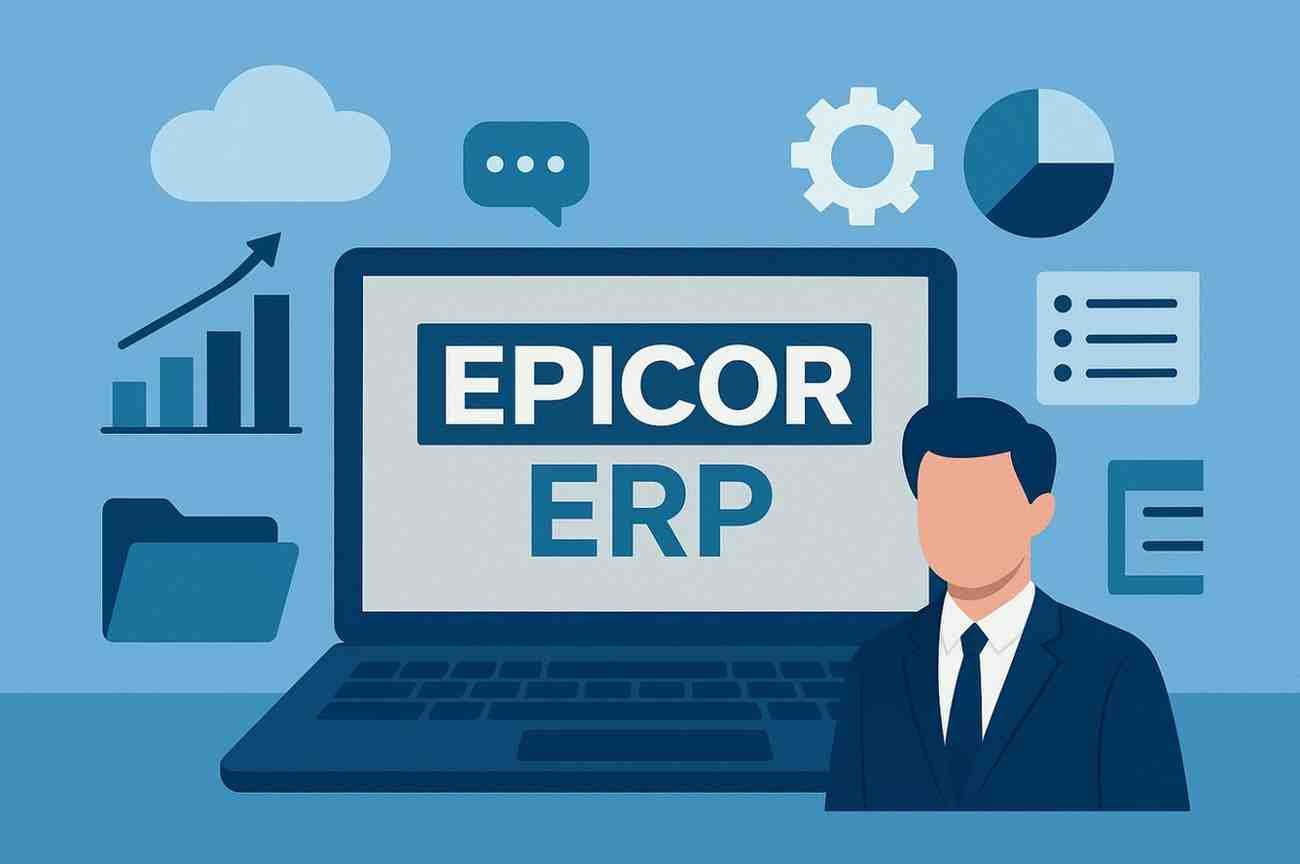
Enterprise Resource Planning software is no longer a luxury reserved for massive global corporations. Today, manufacturers, distributors, and product-driven businesses demand ERP systems that understand their daily operational realities — not just accounting rules. This is where Epicor ERP has carved out a distinct identity.
Rather than competing head-on as a “one-size-fits-all” enterprise platform, Epicor has spent decades refining ERP solutions specifically for manufacturing, distribution, retail, and supply-chain–centric organizations. The result is an ERP ecosystem that feels practical, operationally aware, and grounded in real-world workflows.
This in-depth review explores Epicor ERP from every angle — features, strengths, weaknesses, ideal users, and scenarios where it may not be the right choice.
What Is Epicor ERP at Its Core?
Epicor ERP is a modern, modular enterprise resource planning platform designed primarily for mid-sized to large businesses with complex operational needs. It focuses heavily on industries where inventory, production, logistics, and compliance are business-critical.
Unlike ERP platforms that originate from accounting-first designs, Epicor is operations-first. Financials exist to support production and distribution, not the other way around.
Epicor offers multiple ERP products under its umbrella, but they all share common philosophies:
-
Industry specialization
-
Configurable workflows
-
Scalable architecture
-
Balanced complexity (not overly bloated, not overly simplistic)
Cloud, On-Prem, or Hybrid: Deployment Flexibility
One of Epicor’s key differentiators is deployment flexibility.
Organizations can choose:
-
Cloud-hosted ERP
-
On-premise deployment
-
Hybrid models that combine both
This flexibility appeals especially to manufacturing and distribution companies that:
-
Have legacy infrastructure
-
Require local data control
-
Operate in regions with strict compliance or connectivity constraints
Epicor allows businesses to modernize at their own pace instead of forcing an all-at-once cloud migration.
Core Functional Areas of Epicor ERP
Epicor ERP is a broad suite, but its true strength lies in how well its modules integrate with each other.
Financial Management That Supports Operations
The financial module is robust without overpowering the system.
Key capabilities include:
-
General ledger with multi-company support
-
Accounts receivable and payable
-
Asset management
-
Cost accounting
-
Budgeting and forecasting
-
Tax and compliance support
What stands out is how financial data is natively triggered by operational events like production completion, shipment, returns, and inventory adjustments.
Manufacturing: Epicor’s Signature Strength
Manufacturing is where Epicor truly earns its reputation.
It supports multiple manufacturing modes:
-
Discrete manufacturing
-
Make-to-order
-
Make-to-stock
-
Engineer-to-order
-
Configure-to-order
Key manufacturing features include:
-
Bill of Materials (BOM) management
-
Routing and work center setup
-
Production scheduling
-
Capacity planning
-
Shop-floor execution
-
Cost tracking and variance analysis
Epicor doesn’t force manufacturers into generic templates. Instead, it adapts well to real factory constraints, which is why it’s widely used in metal fabrication, machinery, industrial equipment, and engineered products.
Supply Chain and Inventory Control
Epicor ERP offers deep inventory intelligence — not just quantity tracking.
Key capabilities:
-
Multi-warehouse management
-
Lot, serial, and batch tracking
-
Supplier management
-
Purchase planning
-
Demand forecasting
-
Stock optimization
Businesses dealing with thousands of SKUs, fluctuating demand, or regulated inventory benefit significantly from Epicor’s granular controls.
Distribution and Logistics Management
For distributors, Epicor provides purpose-built workflows that align closely with daily operations.
Distribution features include:
-
Order management
-
Pricing and discount structures
-
Customer-specific catalogs
-
Shipping and freight integration
-
Returns processing
-
Channel management
Whether distributing to retailers, resellers, or directly to customers, Epicor handles volume with stability.
Epicor for Retail and Point-of-Sale Environments
Epicor also serves retail organizations, especially those with complex backend operations.
Retail-related modules support:
-
Point-of-sale integration
-
Inventory visibility across locations
-
Merchandise planning
-
Promotions and pricing rules
-
Omnichannel fulfillment
While not a flashy eCommerce-first ERP, Epicor excels where retail connects deeply with supply chains.
Analytics, Dashboards, and Reporting
Epicor offers built-in reporting tools designed for operational monitoring rather than just executive summaries.
Users can:
-
Build custom dashboards
-
Track KPIs in real time
-
Monitor production efficiency
-
Analyze cost drivers
-
Identify bottlenecks quickly
Advanced analytics can be layered on when deeper insights are required.
User Experience: Practical, Not Decorative
Epicor’s interface focuses on function over flair.
What users generally appreciate:
-
Role-based navigation
-
Logical workflow design
-
Consistent screens across modules
-
Reduced duplicate data entry
While it may not feel as minimalistic as newer SaaS tools, it feels reliable and purpose-driven, especially for long daily usage.
Customization and Configuration
Epicor supports a strong level of customization, but with guardrails.
Organizations can:
-
Configure workflows
-
Customize forms and fields
-
Extend functionality through supported tools
-
Integrate with external applications
The platform encourages configuration before customization, which helps maintain upgrade stability.
Integration Capabilities
Epicor ERP integrates with:
-
CRM platforms
-
eCommerce systems
-
Logistics providers
-
BI and analytics tools
-
Industry-specific software
This makes it suitable as a central operational hub without locking organizations into a closed ecosystem.
Implementation Experience
Epicor implementations are usually conducted by certified partners and follow structured phases:
-
Requirement assessment
-
Process alignment
-
Data migration
-
System configuration
-
User training
-
Go-live and optimization
Implementation success depends heavily on:
-
Process clarity
-
Executive sponsorship
-
Realistic timelines
-
Experienced partners
Epicor rewards preparation and discipline.
Pricing and Cost Considerations
Epicor ERP pricing varies based on:
-
Deployment model
-
Number of users
-
Modules selected
-
Customization needs
It is not a budget ERP, but it often delivers strong value for businesses that:
-
Outgrow entry-level systems
-
Need deep operational functionality
-
Want long-term scalability
Pros of Epicor ERP
-
Strong manufacturing and distribution focus
-
Industry-specific functionality
-
Flexible deployment options
-
Deep inventory and supply chain control
-
Scalable for mid to large enterprises
-
Integrated financial and operational data
Cons of Epicor ERP
-
Not ideal for very small businesses
-
Implementation requires careful planning
-
Interface may feel complex to non-operational users
-
Advanced analytics may require additional setup
-
Can be overkill for service-only companies
Who Should Use Epicor ERP?
Epicor ERP is an excellent fit for:
-
Manufacturing companies with complex production processes
-
Distributors managing large inventories
-
Industrial and engineering firms
-
Organizations transitioning from legacy ERPs
-
Companies that value operational depth over generic simplicity
If your business revolves around making, moving, or managing physical products, Epicor is worth serious consideration.
Who Should NOT Use Epicor ERP?
Epicor may not be the best choice for:
-
Startups or micro-businesses
-
Service-only organizations
-
Freelancers or consultants
-
Companies needing ultra-simple accounting software
-
Businesses without dedicated ERP ownership
In such cases, simpler or lighter ERP solutions may be more cost-effective.
Epicor ERP vs Generic ERP Platforms
Unlike general-purpose ERP systems, Epicor emphasizes:
-
Industry relevance over feature bloat
-
Operational optimization over cosmetic dashboards
-
Practical workflows over theoretical models
This focus is what keeps Epicor competitive in manufacturing-led industries.
Is Epicor ERP Worth It?
Epicor ERP is not trying to win every ERP deal — and that’s precisely why it succeeds in its niche.
It is a reliable, industry-aware, operationally intelligent ERP designed for organizations where production, logistics, and inventory are mission-critical. It rewards businesses that understand their processes and want an ERP that works alongside them rather than forcing generic workflows.
For manufacturers, distributors, and product-driven enterprises aiming to modernize without losing control — Epicor ERP stands as a powerful, proven option.


Reviews
There are no reviews yet.