
Description
As businesses grow beyond basic accounting software, they face a familiar challenge: processes become more complex, compliance requirements multiply, and data starts living in disconnected systems. Choosing the right ERP at this stage is critical — the wrong system can slow growth, frustrate teams, and create long-term technical debt.
Sage X3 positions itself precisely at this inflection point. It is not an entry-level ERP, nor is it a heavyweight enterprise platform meant only for massive corporations. Instead, Sage X3 is built for mid-sized and upper-mid-market organizations that need strong operational control without excessive complexity.
This in-depth review explores Sage X3 from a practical, real-world perspective: what it does well, where it struggles, who it’s best suited for, and who should look elsewhere.
What Is Sage X3?
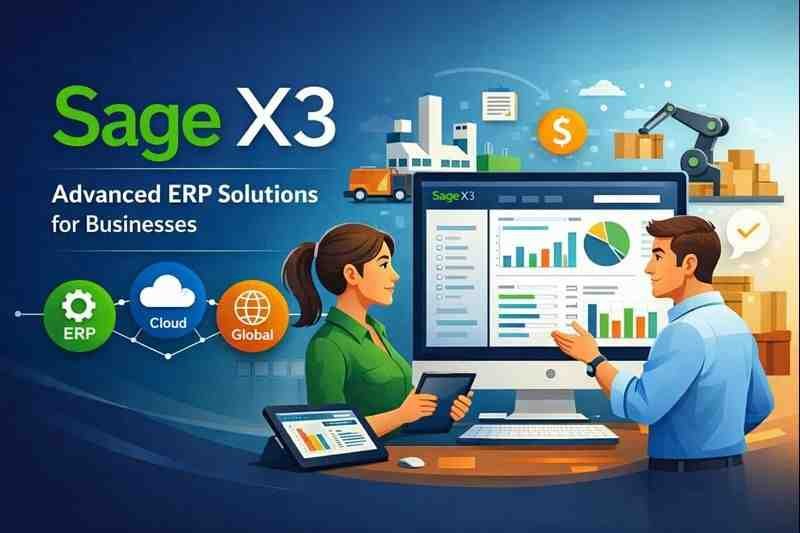
Sage X3 is a comprehensive ERP solution designed to manage an organization’s core business functions — finance, manufacturing, inventory, supply chain, and distribution — within a single, integrated platform.
Unlike simpler accounting-oriented tools in the Sage portfolio, Sage X3 is operations-first. It is built for organizations that:
-
Manufacture products
-
Distribute across regions
-
Manage multiple legal entities
-
Operate in multiple currencies
-
Need visibility across complex processes
Sage X3 is available in cloud, on-premise, and hybrid deployments, giving businesses flexibility in how and where the system runs.
Where Sage X3 Fits in the ERP Landscape
Sage X3 occupies a strategic middle ground in the ERP market.
It sits:
-
Above entry-level systems that handle only accounting and light inventory
-
Below mega-enterprise ERPs that require massive budgets and long implementations
This positioning makes Sage X3 appealing to organizations that have outgrown basic tools but are not ready — or willing — to commit to extremely large ERP ecosystems.
Deployment Options: Cloud, On-Premise, or Hybrid
One of Sage X3’s most practical strengths is deployment flexibility.
Businesses can choose:
-
Fully cloud-hosted Sage X3
-
On-premise installation for higher control
-
Hybrid environments mixing cloud and local infrastructure
This flexibility is especially valuable for:
-
Companies operating in multiple countries
-
Businesses with regulatory or data residency needs
-
Organizations transitioning gradually to the cloud
Sage X3 does not force a single deployment model, allowing modernization at a controlled pace.
Core Functional Areas of Sage X3
Sage X3 is a modular ERP platform, but its modules are tightly integrated to avoid data silos.
Financial Management: Strong, Structured, and Scalable
Finance is one of Sage X3’s strongest pillars.
Key finance capabilities include:
-
General ledger with multi-company support
-
Accounts receivable and payable
-
Fixed asset lifecycle management
-
Cash and bank management
-
Budgeting and financial forecasting
-
Multi-currency and multi-legislation accounting
Sage X3 handles complex accounting structures while keeping processes logical and auditable. Financial data is directly connected to operational activities, reducing reconciliation effort.
Inventory and Warehouse Management
Sage X3 offers detailed and flexible inventory controls designed for businesses with real operational complexity.
Inventory features include:
-
Multi-warehouse management
-
Lot and serial number tracking
-
Stock replenishment rules
-
Quality control checkpoints
-
Inventory valuation and costing
This is particularly beneficial for organizations dealing with regulated products, expiration dates, or complex storage requirements.
Manufacturing Capabilities: Built for Real Production Environments
Manufacturing is a key use case for Sage X3, especially for product-based companies that need visibility across production and costs.
Manufacturing features include:
-
Bills of Materials (BOMs)
-
Routings and work centers
-
Production planning and scheduling
-
Shop-floor control
-
Material requirements planning (MRP)
-
Production cost analysis
Sage X3 supports both discrete and process manufacturing, making it flexible across industries such as food & beverage, chemicals, pharmaceuticals, and industrial manufacturing.
Supply Chain and Distribution Management
Sage X3 offers end-to-end supply chain visibility.
Key capabilities:
-
Purchasing and supplier management
-
Sales order processing
-
Pricing and discount structures
-
Delivery and shipping workflows
-
Returns management
By linking procurement, inventory, sales, and finance, Sage X3 enables faster and more accurate decision-making.
Multi-Company and Global Operations Support
Sage X3 is well-suited for organizations operating across borders.
Global capabilities include:
-
Multi-company structures
-
Multi-currency transactions
-
Localization for various regions
-
Inter-company accounting
-
Centralized reporting
These features make Sage X3 a strong choice for businesses expanding internationally.
Reporting, Analytics, and Insights
Sage X3 includes built-in reporting tools designed for operational and financial insight.
Users can:
-
Generate standard and custom reports
-
Track KPIs
-
Analyze costs and margins
-
Monitor inventory levels
-
Review financial performance
While not marketed as an AI-driven analytics platform, Sage X3 delivers solid, practical insights that support day-to-day management.
User Experience: Functional, Not Flashy
Sage X3’s interface focuses on clarity and structure, not trendy visual design.
User experience highlights:
-
Logical menu layouts
-
Role-based access
-
Consistent navigation
-
Clear data entry screens
While it may feel more “ERP-classic” than minimalist SaaS designs, it remains efficient for users who spend long hours inside the system.
Customization and Configuration
Sage X3 allows a good degree of customization without encouraging risky over-engineering.
Organizations can:
-
Configure workflows
-
Customize screens and fields
-
Adjust business rules
-
Integrate third-party systems
This balance helps businesses adapt the system to their processes while keeping upgrades manageable.
Integration Capabilities
Sage X3 integrates with:
-
CRM systems
-
eCommerce platforms
-
Business intelligence tools
-
Logistics providers
-
Industry-specific applications
This makes Sage X3 capable of serving as a central ERP hub within a broader technology stack.
Implementation Experience
Implementing Sage X3 typically involves:
-
Business process analysis
-
System configuration
-
Data migration
-
Integration setup
-
User training
-
Go-live and stabilization
Implementation success depends heavily on:
-
Clear process ownership
-
Experienced partners
-
Realistic timelines
Sage X3 is powerful, but it rewards planning and disciplined execution.
Pricing and Cost Considerations
Sage X3 pricing varies based on:
-
Deployment type
-
Number of users
-
Modules selected
-
Customization requirements
It is not an entry-level ERP, but it often offers better long-term value than extremely large enterprise platforms for mid-market businesses.
Pros of Sage X3
-
Strong financial management capabilities
-
Excellent fit for manufacturing and distribution
-
Flexible deployment options
-
Multi-company and multi-currency support
-
Integrated supply chain and production workflows
-
Designed for growing middle-market businesses
Cons of Sage X3
-
Not ideal for very small businesses
-
User interface may feel traditional to some users
-
Implementation requires experienced partners
-
Advanced analytics may require extensions
-
Not as heavily industry-specialized as some niche ERPs
Who Should Use Sage X3?
Sage X3 is an excellent choice for:
-
Mid-sized and upper-mid-market companies
-
Manufacturers with complex production needs
-
Distributors managing multiple warehouses
-
Businesses operating in multiple countries
-
Organizations outgrowing basic accounting systems
If your business needs operational depth without enterprise-level complexity, Sage X3 fits well.
Who Should NOT Use Sage X3?
Sage X3 may not be the right fit for:
-
Startups and micro-businesses
-
Freelancers and consultants
-
Service-only companies with minimal inventory
-
Businesses seeking extremely simple software
-
Organizations unwilling to invest in ERP governance
Simpler cloud accounting tools may be more appropriate for these cases.
Sage X3 vs Entry-Level ERP Systems
Compared to basic ERP or accounting software, Sage X3 offers:
-
Deeper inventory and manufacturing control
-
Better scalability
-
Stronger financial governance
-
Support for global operations
While it requires more effort to implement, the long-term benefits are far greater for growing businesses.
Is Sage X3 Worth It?
Sage X3 is a practical, operations-focused ERP designed for businesses that have reached a critical growth stage.
It excels in environments where finance, inventory, manufacturing, and supply chain must work together seamlessly. While it may not offer flashy interfaces or heavy AI marketing, it delivers what truly matters: control, visibility, and scalability.
For mid-market organizations seeking a reliable ERP that grows with them — without pushing them into enterprise-level complexity — Sage X3 is a highly compelling choice.

Reviews
There are no reviews yet.