
Description
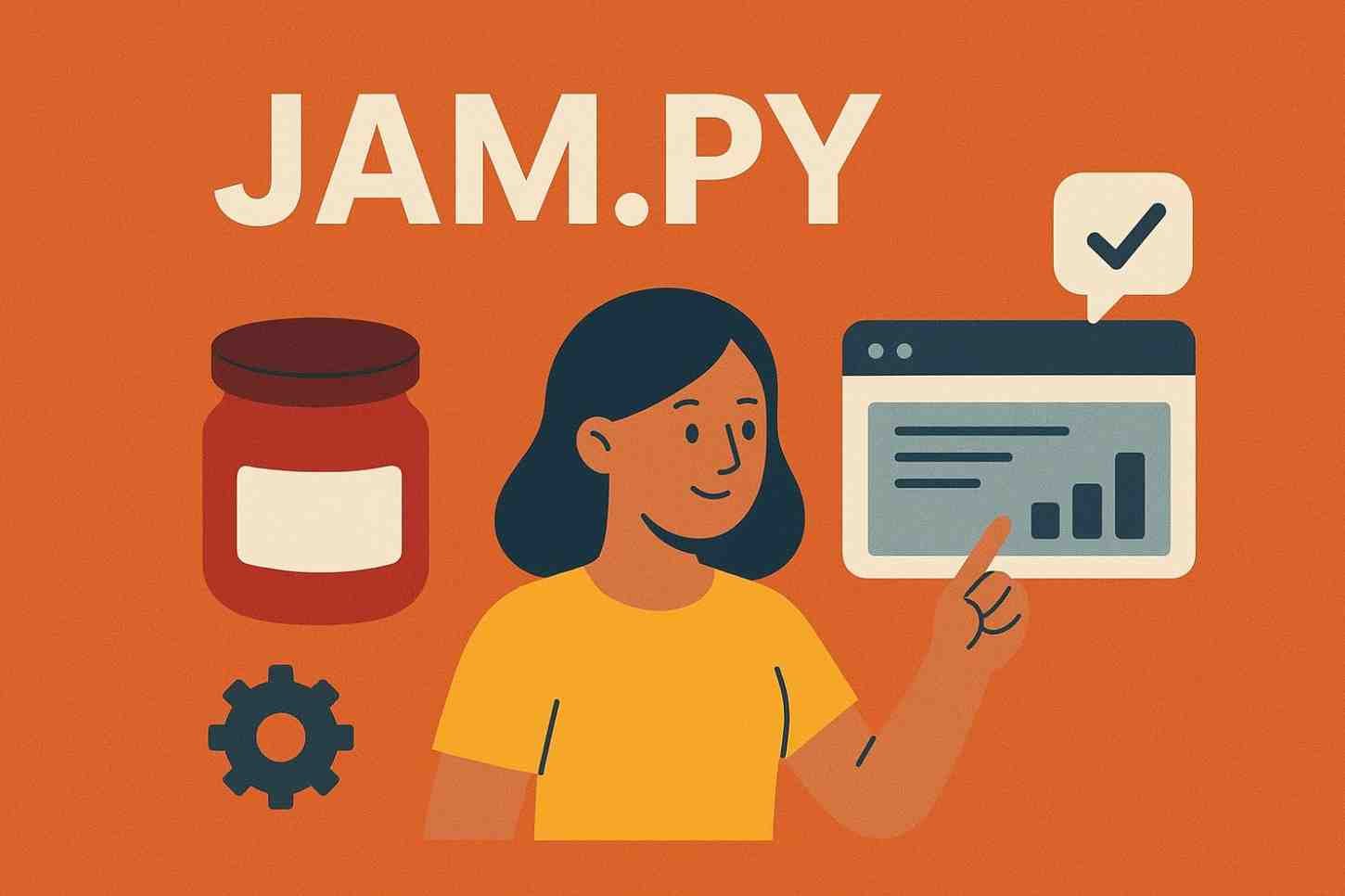
Building database-driven web applications can often require complex coding, lengthy setup, and advanced technical expertise. Jam.py changes that by offering a powerful low-code, full-stack framework that helps developers — and even non-developers — create business-grade web applications quickly and efficiently.
What Is Jam.py?
Jam.py is an open-source, low-code development platform based on Python and JavaScript. It enables developers to rapidly build web applications that interact with databases without needing to write extensive backend code. The framework follows a Model-View-Controller (MVC) design and is known for its speed, simplicity, and flexibility.
Created and maintained by Jam.py Framework developers, the platform is used globally by organizations, freelancers, and enterprise teams looking to modernize legacy systems or build database apps from scratch with minimal effort.
Key Features of Jam.py
1. Low-Code Development Environment
Jam.py allows developers to create powerful applications using visual tools rather than manual coding. Users can define models, forms, and reports through an intuitive interface, reducing development time dramatically.
2. Full-Stack Architecture
Unlike many low-code tools, Jam.py is a true full-stack framework — it handles both the client and server side. This means you can create end-to-end applications with robust backend logic and responsive frontends.
3. Database Flexibility
Jam.py supports major databases such as SQLite, PostgreSQL, MySQL, and Oracle. It allows seamless database integration, automatic schema generation, and live data synchronization.
4. Built-In Authentication and Security
Security is a key strength of Jam.py. It comes with built-in user authentication, access control, and permission management, ensuring that sensitive data remains protected.
5. Reporting and Analytics
The framework provides integrated reporting tools that let users generate detailed data insights, charts, and tables. This makes Jam.py particularly suitable for business management, data analytics, and ERP-style applications.
6. Modular Design
Jam.py supports modular app creation — meaning you can build independent components that can be reused or extended in other projects, improving scalability and maintainability.
7. Cross-Platform Compatibility
Since it’s web-based, applications built with Jam.py run smoothly across all modern browsers and operating systems without extra configuration.
Pros of Using Jam.py
✅ Rapid Application Development – Build complex database applications with minimal coding.
✅ Open-Source and Free – No licensing fees or restrictions on commercial use.
✅ Python-Based – Leverages the power, simplicity, and reliability of Python.
✅ Strong Security Features – Built-in authentication and access control.
✅ Cross-Database Compatibility – Works with multiple relational databases.
✅ Great for Enterprise Solutions – Ideal for internal systems, CRMs, and data tools.
✅ Easy Integration – Connects easily with APIs and external Python libraries.
Cons of Using Jam.py
❌ Smaller Community – Limited developer community compared to frameworks like Django or Laravel.
❌ Basic UI Design – Visual customization options are limited out-of-the-box.
❌ Learning Curve for Non-Python Users – Requires some Python familiarity for advanced features.
❌ Limited Third-Party Plugins – Ecosystem is still growing, so extensions are fewer compared to major frameworks.
Ideal Use Cases for Jam.py
Jam.py is perfect for:
-
Internal business tools (inventory systems, HR dashboards, CRM platforms)
-
Data-driven enterprise apps
-
ERP and finance management systems
-
Legacy system modernization
-
Prototyping database-backed web apps
Whether you’re a startup automating workflows or an enterprise building secure internal portals, Jam.py can save months of development time.
Performance and Scalability
Despite being a low-code tool, Jam.py delivers solid performance. It efficiently handles CRUD operations, supports asynchronous processing, and is designed to work with large data sets. Its Python foundation makes it highly customizable for developers who want to scale or extend functionality.
Community and Support
The Jam.py community is small but active. The framework is regularly updated, and users can access documentation, GitHub resources, and direct community forums for support. While not as large as Django’s ecosystem, it’s steadily growing as low-code adoption increases worldwide.
Is Jam.py Worth Using?
Yes — Jam.py is one of the most efficient low-code frameworks available for Python developers. It combines rapid application development with flexibility and security, making it perfect for building internal tools and business applications fast.
For developers seeking a low-code solution that doesn’t compromise on control or performance, Jam.py is an excellent choice. It may not have the massive ecosystem of larger frameworks, but its simplicity, stability, and database power make it a hidden gem in the world of web app development.


Reviews
There are no reviews yet.