
Description
ERP software has traditionally been associated with long implementations, high costs, and complex systems that only large enterprises could afford. Odoo ERP challenges that mindset completely. It positions itself as a flexible, modular, and business-friendly ERP that can scale from a small startup to a large enterprise without forcing companies into rigid processes or bloated software.
What makes Odoo especially interesting is that it does not try to look or feel like a traditional ERP. Instead, it behaves more like a collection of modern business apps that seamlessly work together. This makes Odoo one of the most talked-about ERP platforms among startups, SMBs, and fast-growing digital businesses.
This in-depth review explores Odoo ERP from a real-world perspective — what it does well, where it struggles, who should use it, and who should think twice before adopting it.
What Is Odoo ERP?
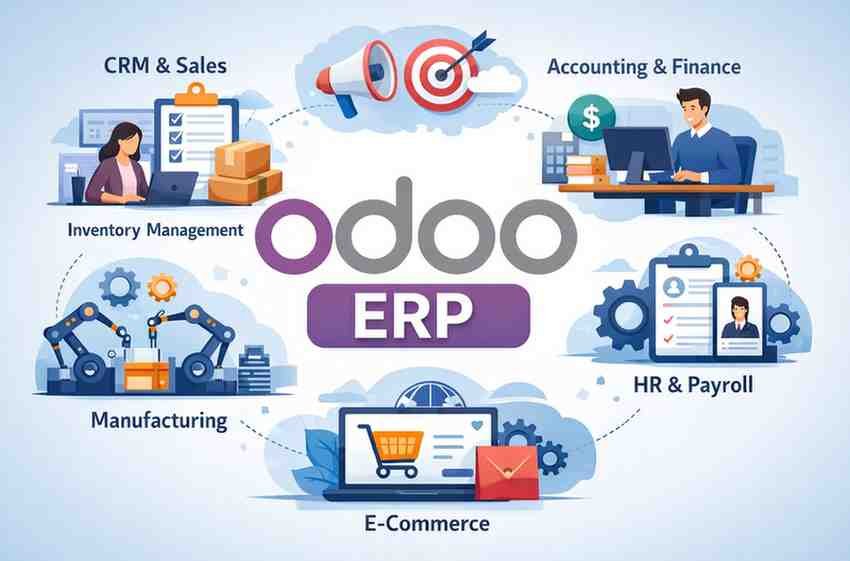
Odoo ERP is an open-source, modular enterprise management platform designed to cover nearly every business function through a unified system.
Instead of selling one monolithic ERP, Odoo offers dozens of integrated apps, including:
-
Accounting
-
Sales and CRM
-
Inventory and warehouse management
-
Manufacturing
-
Purchasing
-
Human Resources
-
Project management
-
Marketing automation
-
E-commerce
-
Website and CMS
Businesses can start small with just one or two apps and expand gradually as their needs grow. This modular design is central to Odoo’s popularity.
The Philosophy Behind Odoo: Simplicity and Flexibility
Odoo was built with a different ERP philosophy:
-
ERP should be accessible, not intimidating
-
Software should adapt to businesses, not the other way around
-
Growth should be incremental, not disruptive
Rather than overwhelming users with hundreds of screens, Odoo breaks functionality into focused apps that feel intuitive and modern. This dramatically lowers the learning curve compared to traditional ERP systems.
Deployment Options: Cloud and On-Premise Freedom
Odoo offers multiple deployment choices:
-
Odoo Online (cloud-hosted by Odoo)
-
Odoo.sh (managed cloud with customization freedom)
-
On-premise self-hosted installation
This flexibility allows businesses to:
-
Control costs
-
Manage data residency
-
Customize deeply if needed
-
Migrate gradually from simple setups to complex environments
Few ERP systems allow this level of deployment freedom without forcing vendor lock-in.
Core Business Modules in Odoo ERP
Odoo’s strength lies in the breadth of its tightly integrated modules.
Accounting and Finance: Clean and Business-Friendly
Odoo’s accounting module is designed to be powerful without feeling heavy.
Key features include:
-
General ledger
-
Accounts receivable and payable
-
Bank synchronization
-
Automated billing and invoicing
-
Expense management
-
Multi-currency support
-
Tax configuration
The system automates repetitive accounting tasks and connects finance directly with sales, inventory, and payroll data, reducing manual errors.
CRM and Sales Management
Odoo CRM is one of its most widely used modules.
Sales-related features include:
-
Lead and opportunity tracking
-
Visual sales pipelines
-
Automated follow-ups
-
Quotation and order management
-
Customer communication history
Because CRM integrates directly with invoicing, inventory, and delivery, teams gain a complete view of customer journeys from lead to payment.
Inventory and Warehouse Management
Odoo’s inventory module can scale from basic stock tracking to complex warehouse environments.
Key capabilities:
-
Real-time inventory visibility
-
Multi-warehouse management
-
Lot and serial number tracking
-
Automated replenishment rules
-
Barcode scanning support
-
Dropshipping workflows
This makes Odoo practical not just for small sellers but also for logistics-heavy operations.
Manufacturing: Flexible and Expanding
Odoo supports discrete and process manufacturing with growing sophistication.
Manufacturing features include:
-
Bills of Materials (BOMs)
-
Work orders
-
Routing and work centers
-
Production planning
-
Material requirements planning (MRP)
-
Cost tracking
While not as deep as some manufacturing-only ERP systems, Odoo offers excellent flexibility for growing production businesses.
Human Resources and Payroll
Odoo HR modules help manage employees without separate systems.
HR features include:
-
Employee records
-
Leave management
-
Attendance tracking
-
Recruitment workflows
-
Payroll integration (varies by region)
The seamless link between HR, accounting, and project tracking improves cost analysis and workforce planning.
Project Management and Services
For service-based businesses, Odoo’s project tools are a major advantage.
Capabilities include:
-
Project planning and milestones
-
Task management
-
Timesheets
-
Billing based on time and materials
-
Profitability tracking
This makes Odoo appealing to agencies, consultants, and IT service providers.
E-Commerce, Website, and Marketing Integration
One of Odoo’s most unique strengths is its built-in digital ecosystem.
Odoo includes:
-
Website builder
-
E-commerce platform
-
Email marketing
-
Marketing automation
-
Live chat and customer support tools
All of these modules share the same database, eliminating integration headaches common with third-party tools.
User Experience: Modern and Intuitive
Odoo’s interface feels closer to a modern SaaS application than a traditional ERP.
User experience highlights:
-
Clean, minimalist design
-
App-based navigation
-
Drag-and-drop configurations
-
Mobile-friendly screens
-
Role-based access
This usability is one reason Odoo adoption is often faster than legacy ERP platforms.
Customization and Open-Source Power
Odoo’s open-source nature is both a strength and a responsibility.
Advantages:
-
Full access to source code
-
Thousands of community-built apps
-
Highly customizable workflows
-
No forced vendor lock-in
Considerations:
-
Poor customizations can create technical debt
-
Requires skilled developers or partners
-
Governance is critical for long-term scalability
When used wisely, Odoo’s flexibility is unmatched.
Integration Ecosystem
Odoo integrates easily with:
-
Payment gateways
-
Shipping providers
-
BI tools
-
Third-party marketplaces
-
Industry-specific software
This makes it suitable as a central business platform rather than a standalone ERP.
Implementation Experience
Odoo implementation complexity depends on scope.
Simple deployments:
-
Can go live quickly
-
Require minimal training
Complex deployments:
-
Need professional partners
-
Require data migration and workflow planning
-
Depend heavily on customization discipline
Odoo rewards planning but does not punish incremental adoption.
Cost Structure and Ownership
Odoo’s pricing model is transparent and scalable.
Costs depend on:
-
Number of users
-
Apps used
-
Hosting model
-
Custom development needs
Compared to traditional ERP systems, Odoo offers lower entry cost and predictable scaling.
Pros of Odoo ERP
-
Modular and scalable architecture
-
Open-source flexibility
-
Modern, user-friendly interface
-
Strong CRM and sales integration
-
Built-in website and eCommerce tools
-
Cost-effective for growing businesses
-
Strong global community
Cons of Odoo ERP
-
Over-customization can cause maintenance issues
-
Manufacturing depth may not suit very complex factories
-
Quality depends heavily on implementation partner
-
Some features vary by edition
-
Requires governance for large deployments
Who Should Use Odoo ERP?
Odoo ERP is ideal for:
-
Startups and SMBs
-
Fast-growing digital businesses
-
E-commerce companies
-
Service-based organizations
-
Companies wanting one platform for operations and marketing
-
Businesses seeking flexibility over rigid processes
It is especially powerful for organizations that expect change and growth.
Who Should NOT Use Odoo ERP?
Odoo may not be suitable for:
-
Extremely large enterprises with heavy compliance needs
-
Businesses requiring ultra-specialized manufacturing workflows
-
Organizations lacking ERP ownership or governance
-
Companies wanting zero customization effort
-
Teams unwilling to invest in training and process alignment
In such cases, more rigid enterprise ERPs may be safer.
Odoo ERP vs Traditional ERP Systems
Traditional ERP systems emphasize stability and control. Odoo emphasizes adaptability and speed.
Key differences:
-
Faster deployment
-
Lower initial cost
-
Easier user adoption
-
Greater customization freedom
This makes Odoo attractive to modern, agile organizations rather than deeply bureaucratic ones.
Is Odoo ERP Worth It?
Odoo ERP is not just software — it is a business platform.
Its modular structure, open-source flexibility, and modern user experience make it one of the most versatile ERP solutions available today. While it requires thoughtful implementation and disciplined customization, its ability to grow alongside businesses is its greatest strength.
For organizations that value flexibility, scalability, and user adoption over rigid enterprise processes, Odoo ERP is not just worth considering — it can become a long-term competitive advantage.

Reviews
There are no reviews yet.