
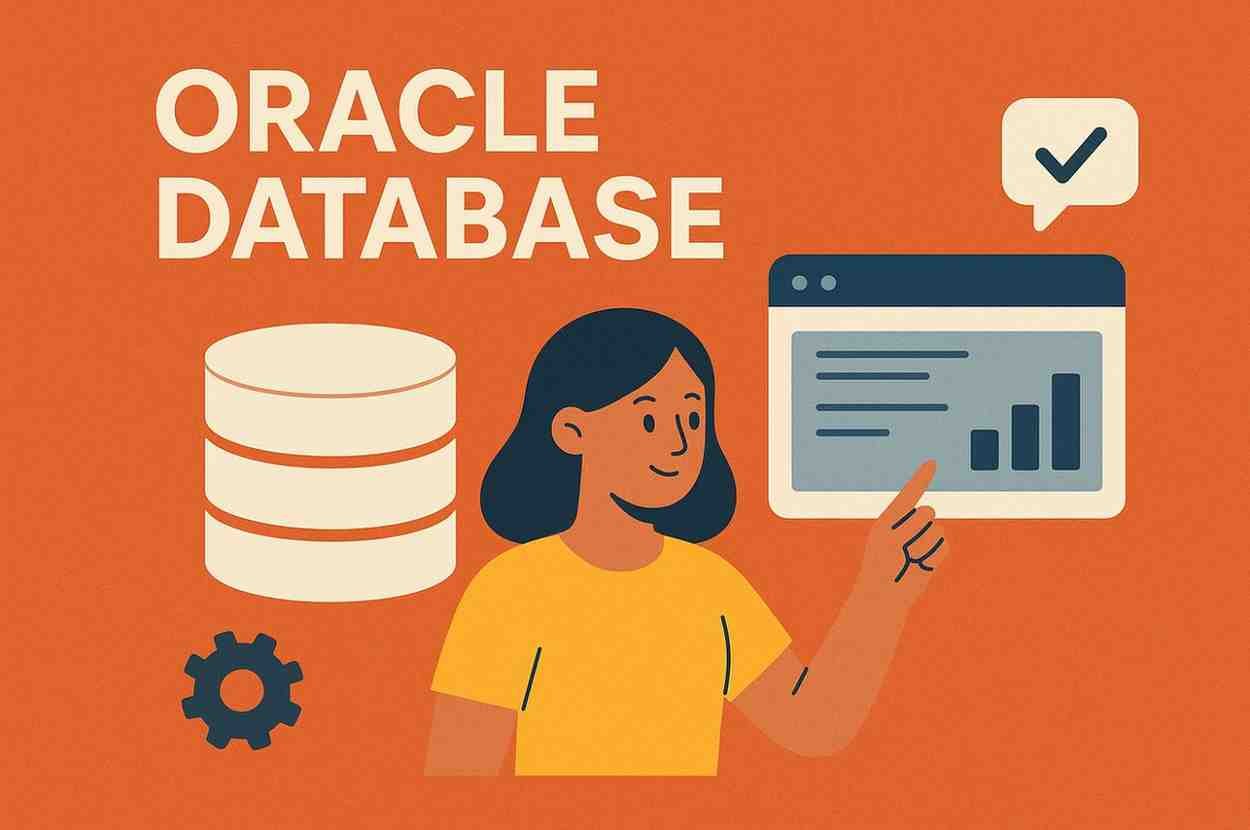
Description
When it comes to enterprise-level database management, few names carry as much weight as Oracle Database. Renowned for its reliability, performance, and scalability, Oracle remains one of the most powerful and widely adopted relational database systems in the world. It’s a go-to solution for large organizations that need secure, mission-critical data management at scale.
What Is Oracle Database?
Oracle Database is a multi-model relational database management system (RDBMS) developed by Oracle Corporation. Initially released in 1979, it has evolved into a sophisticated data platform supporting SQL, NoSQL, and cloud-native architectures.
The system is built to handle high-volume transactions, complex queries, and large-scale analytics — making it the backbone for industries like finance, telecommunications, government, and e-commerce.
Key Features of Oracle Database
1. Multi-Model Architecture
Oracle Database supports relational, document, graph, spatial, and key-value data models in one unified system. This flexibility allows developers to handle diverse workloads without switching between databases.
2. High Availability and Disaster Recovery
Oracle’s Real Application Clusters (RAC) and Data Guard features ensure continuous availability and fault tolerance. Even during maintenance or hardware failures, data remains accessible, ensuring uninterrupted business operations.
3. Advanced Security
Security is a major strength of Oracle Database. Features such as Transparent Data Encryption (TDE), Database Vault, and Data Masking safeguard sensitive data against unauthorized access, ensuring compliance with global data protection standards.
4. Performance Optimization
Oracle uses sophisticated features like Query Optimizer, In-Memory Processing, and Automatic Storage Management (ASM) to deliver exceptional performance for both transactional (OLTP) and analytical (OLAP) workloads.
5. Scalability and Partitioning
With its partitioning capabilities, Oracle allows tables and indexes to be divided for better query performance and manageability. It scales efficiently from small departmental setups to global data centers.
6. Cloud Integration
Oracle Database integrates seamlessly with Oracle Cloud Infrastructure (OCI), offering Database-as-a-Service (DBaaS) and autonomous database options. The Oracle Autonomous Database automates tuning, patching, backups, and scaling — reducing human intervention and operational costs.
7. Developer Tools and APIs
Oracle supports SQL, PL/SQL, REST APIs, and integration with popular programming languages (Python, Java, C++, etc.), making it versatile for both traditional and modern app development.
Pros of Using Oracle Database
✅ Enterprise-Grade Reliability – Trusted by Fortune 500 companies worldwide.
✅ Unmatched Scalability – Handles vast amounts of data and transactions effortlessly.
✅ Robust Security – Industry-leading protection for sensitive and mission-critical data.
✅ Comprehensive Features – Supports both transactional and analytical processing.
✅ Cloud-Ready – Integrates with Oracle Cloud and supports autonomous database services.
✅ Cross-Platform Compatibility – Runs on Windows, Linux, Unix, and even cloud-native environments.
✅ Excellent Documentation and Support – Backed by Oracle’s global enterprise support.
Cons of Using Oracle Database
❌ High Licensing Costs – Oracle’s enterprise pricing can be prohibitive for small businesses.
❌ Complex Setup and Administration – Requires experienced database administrators (DBAs).
❌ Resource Intensive – Demands high-performance hardware for optimal results.
❌ Steep Learning Curve – Mastering Oracle’s ecosystem takes time.
❌ Vendor Lock-In – Migration to other databases can be challenging.
Ideal Use Cases for Oracle Database
Oracle Database is ideal for organizations that demand performance, reliability, and security at scale. Common use cases include:
-
Banking and Financial Systems
-
E-commerce Platforms
-
Government and Defense Applications
-
Telecommunications Networks
-
Healthcare and Research Institutions
-
Large Enterprises with Global Operations
Performance and Scalability
Oracle’s reputation for high performance is well-earned. Its in-memory database technology, parallel query execution, and automatic indexing capabilities provide unmatched speed for both real-time analytics and massive transaction processing. The system scales horizontally and vertically, accommodating billions of records without degradation.
Security and Compliance
Security has always been a cornerstone of Oracle’s architecture. It complies with major international standards like GDPR, HIPAA, and ISO/IEC 27001. The built-in encryption, data masking, and auditing tools ensure that sensitive data stays protected both at rest and in transit.
Oracle Autonomous Database
One of Oracle’s most innovative products is the Autonomous Database, a self-managing version that leverages AI and machine learning to automate routine tasks like tuning, patching, and scaling. This not only minimizes human error but also lowers maintenance costs and increases uptime.
Community and Support
Oracle offers a vast ecosystem of resources including official documentation, Oracle University training, certification programs, and a global developer community. Paid enterprise support is available 24/7, making it a dependable solution for mission-critical environments.
Is Oracle Database Worth It?
Yes — if you’re an organization that prioritizes data integrity, performance, and long-term scalability, Oracle Database is one of the best investments you can make. It’s built for large-scale, data-intensive applications where reliability and security can’t be compromised.
While it’s not the most budget-friendly or beginner-friendly option, Oracle Database is unmatched in enterprise data management power.



Reviews
There are no reviews yet.